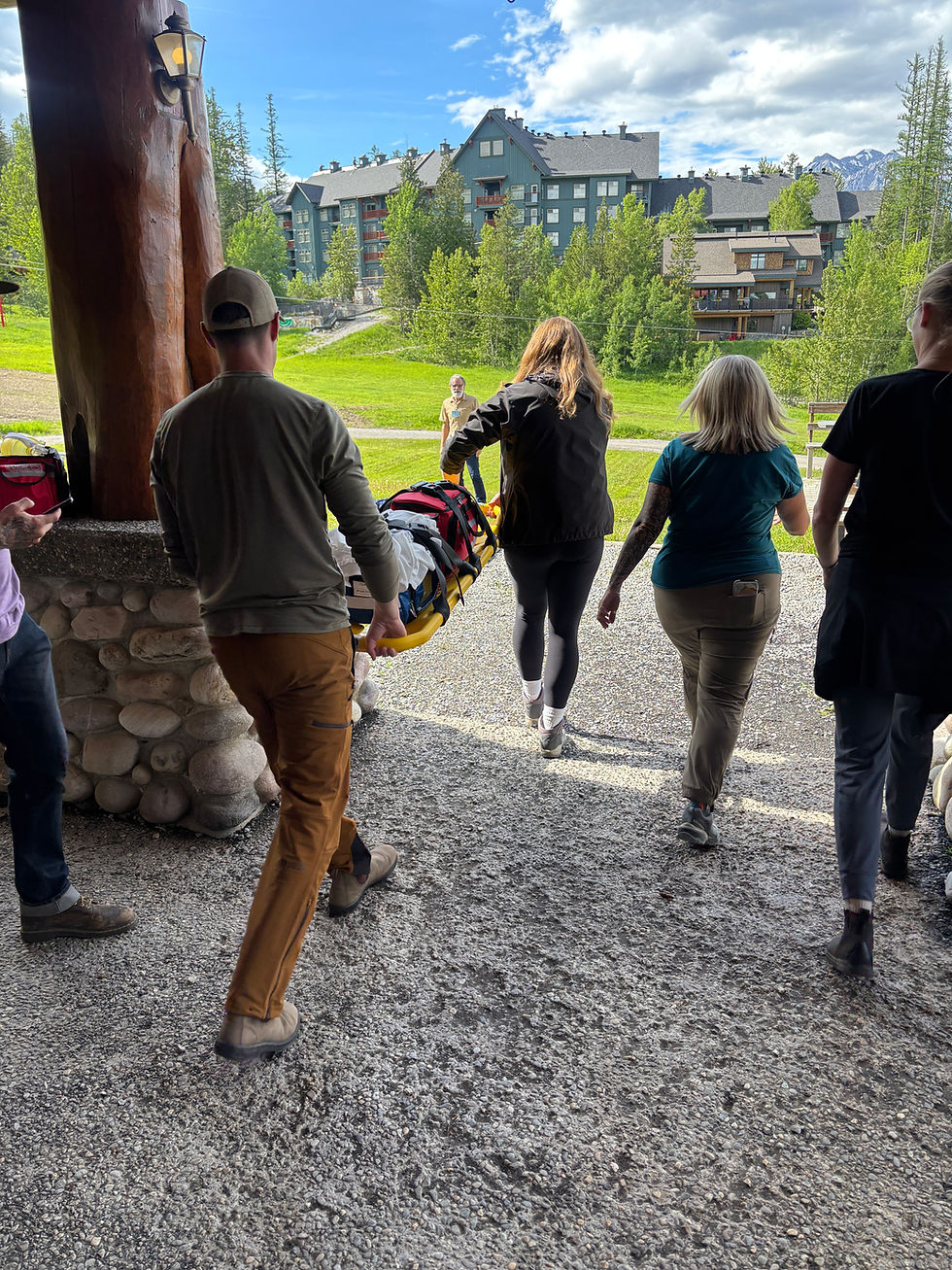
Voices from the Field — What Rural Providers Are Calling For

The people who understand rural healthcare most deeply are the ones delivering it. Physicians working in remote communities, nurses organizing inter-facility transfers, paramedics navigating unpaved roads in failing light — these are the providers who see, every shift, both the extraordinary resilience of rural healthcare and the very real unmet needs that remain. At the RM-RC course in Fernie, MRBC created space for those voices to be heard — and what participants shared was as instructive as anything taught in the classroom.
The opportunity they see
Across the evaluations, one theme appeared consistently: rural and remote providers are ready. Ready to do more, to collaborate more, and to advocate more — if given the tools, the training, and the connections to do so. They are not waiting for a rescue from outside. They are asking for support in building something better from within.
"Rural teams already function well because there are so few staff — this course would benefit all rural teams in building culture and relationships." — Registered Nurse
"More chances to talk together! We all face similar challenges yet rural and remote clinicians have the least 'phone a friend' connections. We need to band together to be a bigger voice of change." — Registered Nurse
That desire for connection runs deep. Providers who work in communities separated by hundreds of kilometers described a sense of isolation — not clinical isolation, but professional isolation. The experience of meeting peers at the RM-RC course, and realizing they were grappling with the same challenges, was itself a form of relief.
"This course has been an exceptional reminder that my site is not the only site struggling with patient transport, and that it takes all of us as a team to drive change." — Registered Nurse
What they are asking for
Equity was a recurring theme — not as an abstract concept, but as a lived reality for providers serving Indigenous and remote communities who see firsthand the consequences of geographic and systemic disadvantage. Participants spoke with clarity about the obligation to close those unmet needs, and about the opportunity to do so through better-coordinated, better-resourced community-based care.
"In an underserved community, we as healthcare can work better together to create a system to support sites and transport. I feel heard and seen — not alone in this desire." — Registered Nurse, 18 years' experience
Where MRBC fits
What emerged from the RM-RC course was not a list of complaints — it was a call for collaboration. Rural providers are not asking to be rescued. They are asking for a partner: an organization that understands their context, takes their expertise seriously, and works alongside them to build something new that complements and strengthens the current system.
That is precisely what MRBC was built to be. A clinician-led, community-anchored organization that brings training, connections, and advocacy directly to the providers and communities that need them. The RM-RC course in Fernie was one expression of that commitment — and the providers who attended left not just better trained, but more hopeful that the kind of care their patients deserve is genuinely within reach.
"There is a clear need for new organizations like MRBC to fill gaps that are unserved. Thank you — I feel more confident delivering safe care to isolated and vulnerable populations with long transport times." — Physician
"I cannot wait to share this amazing organization with my colleagues, take back all my learnings, and watch this program thrive." — Registered Nurse
The voices from the field are clear. The path forward is together.
All participant quotes anonymized to professional role only. Source: RM-RC Course Evaluations, Fernie BC, June 8–12, 2026.